
Tianyu Wu
Graduate Student, Computational and Biophysics
Diwakar Shukla Group
Roger Adams Laboratory, Room 101
University of Illinois at Urbana-Champaign
I am a Ph.D. candidate in Biophysics and Quantitative Biology at the University of Illinois Urbana-Champaign (UIUC), working in the Diwakar Shukla Group. My research is in AI for Biology (AI4Bio) and Protein Design, with a focus on automatic scientific discovery: building generative AI systems that propose scientific hypotheses and designs.
Lately I have been asking what these systems can know about conditions they have never observed, for example whether a virtual cell can predict a pathway it has never seen switch on, and how domain expertise can ship as a module that plugs into each new foundation model instead of a fork of an old one. The same question runs through my work on discovery systems: when two mechanistic explanations fit the same data equally well, which further measurement tells them apart?
My background is in AI for protein engineering, where I build models that predict and optimize physicochemical properties such as aggregation propensity, with applications including Rubisco engineering. Most recently I designed one hundred de novo binders for the five challenges of the 2026 Anthropic × Adaptyv competition. The hard part there was not generating candidates but choosing among them: on past competition data the usual interface confidence scores barely separate binders from non-binders, so every threshold in that pipeline is read off a control, and three gates were dropped for failing theirs.
research
all projects →
Why we should include spatial information in whole cell modeling
Spatial Heterogeneity Modulates Activation Dynamics of the Yeast Galactose Regulatory Circuit
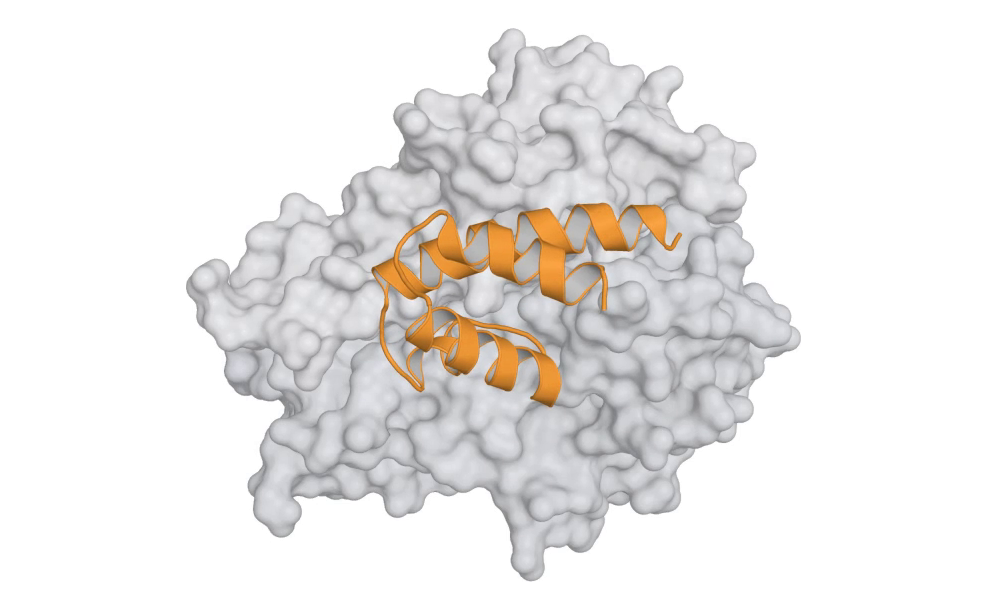
How do you pick twenty de novo binders when the confidence scores do not work?
One hundred de novo designs across the five challenges of the 2026 Anthropic × Adaptyv competition. Every threshold is read off a control, and the metrics that failed their own controls were dropped rather than trusted.
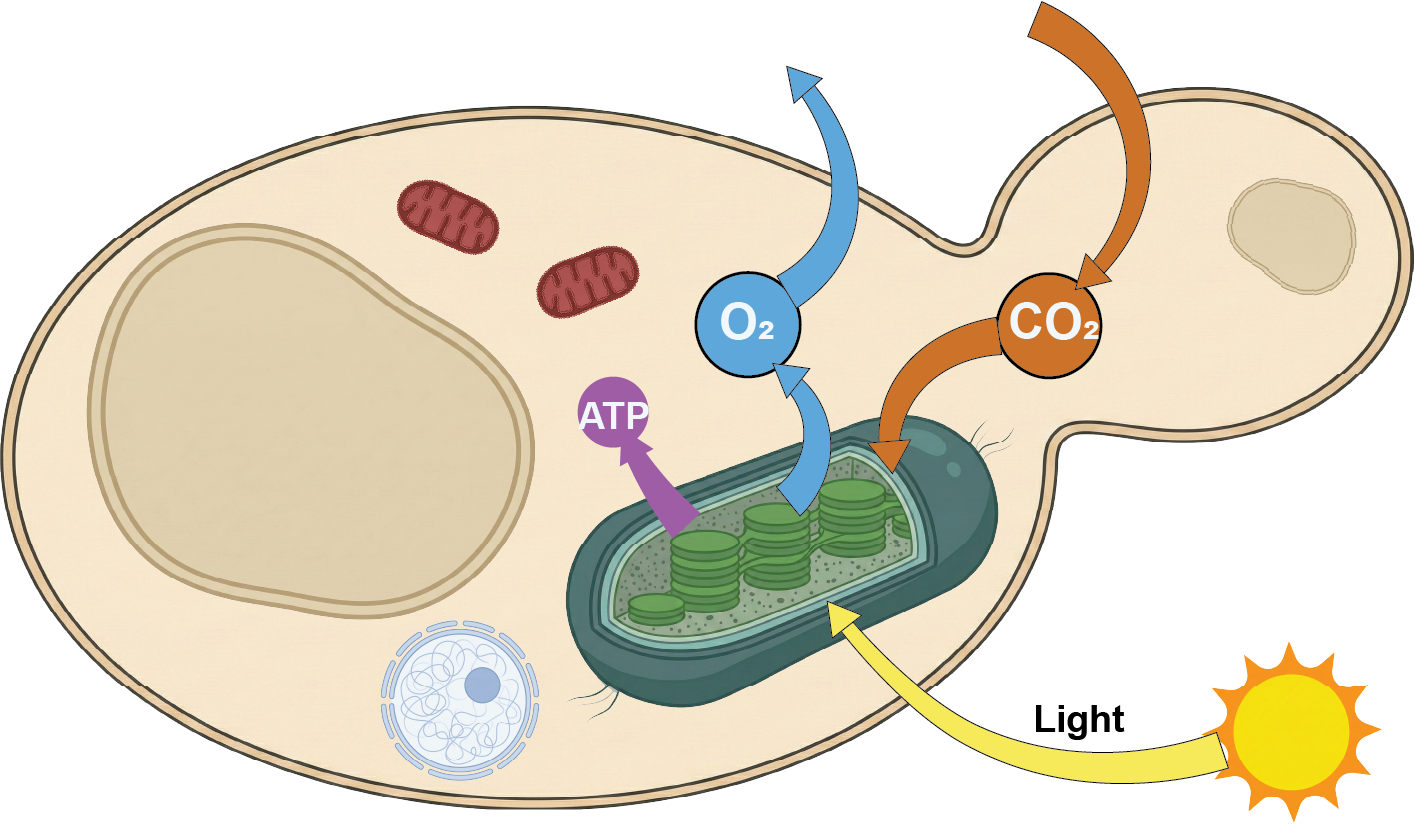
What must a host and its engineered endosymbiont exchange?
A genome-scale model of synthetic yeast–cyanobacteria endosymbiosis resolves the host's energetic dependence and the direction of interface carbon
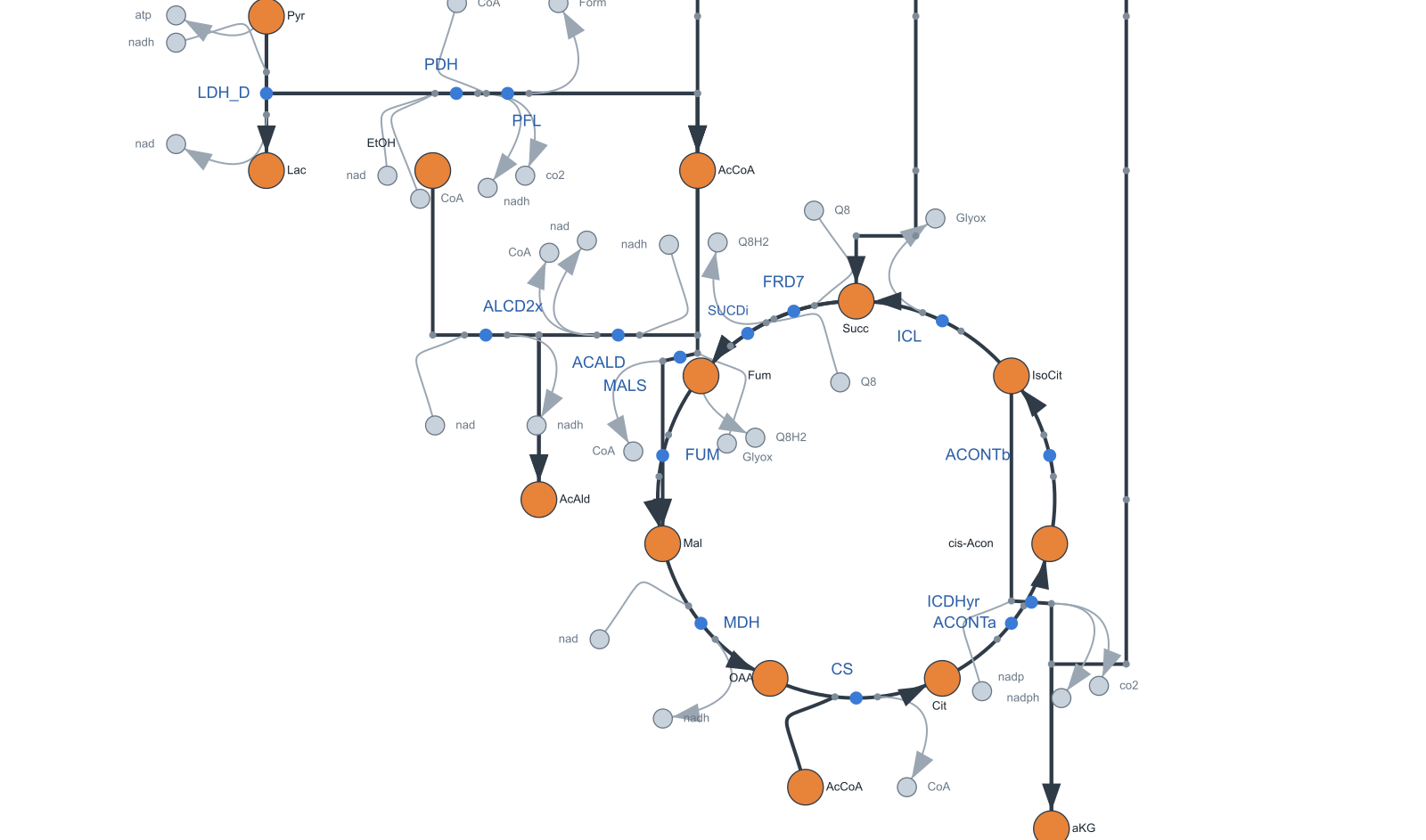
Can a metabolic network be drawn the way a curator would draw it?
MetaCarto 2 draws any genome-scale model as publication-quality Escher maps, deterministically, with no hand editing. All 108 BiGG models are already drawn and browsable.
publications
abstracts, BibTeX and search →2026
- Spatial heterogeneity alters the dynamics of the yeast galactose switch: Insights from 4D RDME–ODE hybrid simulations
- MetaCarto: biologically faithful automatic layout for genome-scale metabolic maps
2025
experience
full cv →- Graduate Researcher, AI for Biology and Protein DesignDiwakar Shukla Group, University of Illinois Urbana-Champaign
- Learned ranker for protein-ligand pose prediction that reaches 86.0% top-1 accuracy on PoseBusters v2.
- Protein language models (ESM2) adapted with LoRA fine-tuning.
- Tests of whether LLM representations and outputs can be trusted, using acceptance guards and null controls (NeurIPS 2026 XAI4Science workshop).
- Methods for automatic scientific discovery: deciding which measurement separates competing mechanistic explanations of the same data.
- Graduate Researcher, Whole-Cell ModelingLuthey-Schulten Group, University of Illinois Urbana-Champaign
- Built the first 4D hybrid RDME-ODE simulations of the yeast galactose switch on the GPU-based Lattice Microbes platform, with cell geometry taken from cryo-electron tomograms.
- Benchmarked the multi-GPU solver under different spatial decompositions.
- Platform talk and session co-chair, Systems Biophysics, Biophysical Society Annual Meeting 2026.
education
- Ph.D., Biophysics and Quantitative BiologyUniversity of Illinois Urbana-Champaign, Urbana, IL
academic service
- Reviewer, International Conference on Machine Learning (ICML)
- Reviewer, PLOS Computational Biology
news
all news →| Nov 19, 2026 | Submitted one hundred de novo binders across all five challenges of the 2026 Anthropic × Adaptyv competition — EGFR, TNF-α, GLP-1R, TfR1 and a KRAS G12D neoantigen — every panel zero-shot, with each selection threshold calibrated against a scrambled-sequence control. No assay results back yet. 🧬 |
|---|---|
| Oct 6, 2026 | Released MetaCarto 2: every one of the 108 BiGG models drawn as curator-style Escher maps, plus each whole model on a single canvas, with no text overlapping anything. Browse the maps in the viewer, run it on your own model, or read the preprint on bioRxiv. 🗺️ |
| Feb 22, 2026 | Platform Talk and Session Co-Chair – Systems Biophysics at BPS2026 |
| Sep 5, 2025 | Oral Presentation – MCB Retreat 2025 |
| Jul 28, 2025 | Talk in iPoLS 2025 about Spatial Heterogeneity Alters the Dynamics of the Yeast Galactose Switch |